
 +977- 9841273869
Everest Trek in Nepal

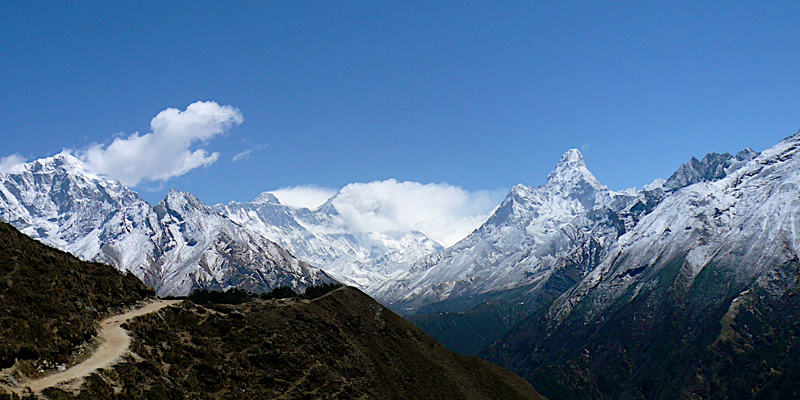

Mount Everest Trekking in Nepal
Mt Everest Trekking is one of the most popular Adventure Life time Himalaya trekking in Nepal. The Treks through the Everest or Sagarmatha National Park have inspired countless dreams and adventures, including visions of scaling the highest mountain on earth to those of getting a taste of the high mountains with a pack on their back and a camera in hand; ready to capture some incredible views of the lofty snowy mountain peaks that seem to grow in this region.
Everest trekking is located in eastern Nepal and it contains parts of the Himalayas and the southern half of Mount Everest. The Everest national park was created in July 19, 1976 and in 1979 was inscribed as a Natural World Heritage Site. Sagarmatha is Sanskrit for "Sagar = sky (not to be confused with sea/ocean) and matha = forehead or head " and is the modern Nepali name for Mount Everest.
Everest trekking is depends entirely on the route that you have chosen. Mt. Everest treks take to you heart of the Khumbu Himalayan region include the Gokyo valley and Everest base camp trekking trials mainly. Everest treks offer different spectacular trekking trail such as Everest base camp trekking, Kala pattar , Gokyo valley trek , Gokyo Cho la pass trekking, Renjo la pass trekking, Everest 3 high pass trekking, Everest view trekking, Everest panorama trekking, and climb Island peak including Everest base camp.
The original route taken on the first ascent of Everest trekking was from Jiri. The approach to this region now usually begins with a breathtaking flight from Kathmandu to Lukla airstrip (2,800 meters). If you decide against the flight then it will mean a trek in from Jiri, this will take about seven to eight days walking. to Lukla
Everest Base Camp Trekking - 15 days
 The Everest Base Camp trek is the most famous trekking route in the world and this is a once in a lifetime opportunity to see some of the most breathtaking scenery imaginable. Nepal is a fascinating country.
Max Elevation : 5545
Trekking Duration: 13 days.
Price: $
Everest Gokyo Lake Trekking - 14 days
 Gokyo Lake trek is beginning with the spectacular mountain flight to Lukla we are rewarded with amazing mountain views. We visit Namche Bazaar, Thami and Khumjung spending valuable time acclimatizing to the
Max Elevation : 5346m /
Trekking Duration: 14 days
Trek Cost: $
View Details »
Everest Panorama Trekking -10 days
 Everest Panorama trekking route is more famous because of the friendly Sherpa people, colorful festivals and the Buddhist monasteries. This trek is recommended to the trekkers who have only a limited time. Trekkers
Max Elevation : 3800m /
Trekking Duration: 10 days.
Cost: $
View Details »
Gokyo Chola Pass EBC Trekking - 17 days
 Gokyo Cho la pass and Eveerest Base Camp trek is one th most famous trekking rouite in Khumbu region. This is hardTrek, demanding previous experience and walking over the pass in to the himalayas. After a flight
Max Elevation : 5545m /
Trekking Duration: 17 days.
Tre Cost: $
Jiri to Everest Base Camp Trekking - 22 days
 Starting with 6 hour driving (187KM)to Jiri.this trek follows the traditionl routetaken by early everest expedition and still serve main artly to the roadless Everest region. This trek offers an wonderful opportunity to climb
 Max Elevation : 5360m / Type: Teahouse / Grade: Moderate / Trekking Duration: 20 days.View Details »
Lukla Kalapathar Everest Base Camp Trekking - 14 days
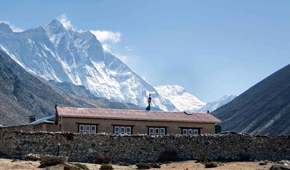 This Everest Base Camp trek is designed to fulfill the dream of many trekkers to experience the historic route to the base of the worlds highest mountain. Our carefully devised itinerary provides a fine opportunity to visit
Max Elevation : 5416m / Type: Teahouse / Grade: Moderate / Trekking Duration: 13 days.View Details »
Everest Renjo La Pass Trekking - 17 days
 Everest Renjo La pass Trekking It goes through Thamo (3,700 m) and Thame (3,900 m) are Sherpa villages, Renjo La pass trekkingabout 2-4 hours northwest of the Park headquarters. About 50 households are located
Max Elevation : 3700m / Type: Teahouse / Grade: Moderate / Trekking Duration: 13 days.View Details »
Rolwaling Trekking - 19 days
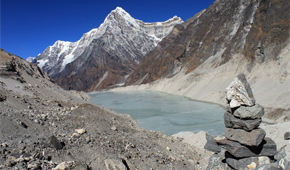 The Rolwaling trek is one of the strenuous wilderness trek of Nepal. This trek starts from Dolakha, near Charikot, an eight-hour drive from Kathmandu. And it provides an experience the remoteness of this region, romantic
 Max Elevation : 5700m / Type: Teahouse / Grade: Moderate / Trekking Duration: 17 days.View Details »
Everest Sunrise Treks - 8 days
 Everest Sunrise View Trek is an ideal for all those who wish to enjoy the glorious beauty of the Everest region but have limited time at hand. This trek offers spectacular views of Everest, Lhotse, Thamserku, Ama Dablam and many other numerous peaks.
Max Elevation : 3870m /
Trekking Duration: 08 days.
Trek Cost: $
Dudh Kunda Trekking - 18 days
 Dudh Kunda Trekking is new and unique trek that has been designed by look at the high mountains and remote Solu Khumbu region. Though less high and famous than the neighboring Khumbu, it is likewise inhabited by the friendly
 Max Elevation : 3870m / Type: Teahouse / Grade: Moderate / Trekking Duration: 14 days.View Details »
Everest 3 High Pass Trekking - 20 days
 This is an ultimate trek that will take you through the famous three passes of Everest, namely the Renjo La pass, the Cho La pass and the Kongma La pass. It is a trek with unparalled alpine beauty and without doubt
Max Elevation : 5545m
Trekking Duration: 18 days.
Cost : $ View Details »
Mera Peak Amphu Laptcha Pass Trekking - 20 days
 This is one of Nepal’s most varied and challenging treks, set in breathtaking high mountain scenery. The extension to cross the Amphu Lapcha pass (5845m) adds significant interest to a climb of Mera Peak, enabling one to explore
Max Elevation : 5845m /
Trekking Duration: 20 days.
Trek cost: $
Everest Himalaya Trek - 18 days
 Trekking in Everest Himalaya or Mount Everest – the highest mountain on earth - dominates the landscape and shapes the cultures and beliefs in the Himalayas. For the ultimate challenge, a Mount Everest holiday has no equal.
Max Elevation : 5416m / Type: Teahouse / Grade: Moderate / Trekking Duration: 18 days.View Details »
Arun Valley Trekking - 15 days
 Arun Valley trekking is trekking in remote area of Nepal which is not frequently visited by tourists. The trek is between the two Mountains-Everest and Makalu where we can experience unique culture and variety of natural flora and fauna.
Max Elevation : 3800m / Type: camping / Grade: Moderate / Trekking Duration: 15 days.View Details »
Nepal Trekking Regions

Nepal Travel Information
Nepal Packages Tours
- Kathmandu - Pokhara - Chitwan package tour
- Kathmandu-Nagarkot-Pokhara Tour.
- Discover Nepal Cultural Tour
- 9 Days Tours in Nepal
- Nepal Holidays Package Tours
- All Nepal Tour
- World Heritage Sites Tour
- Nepal Tibet & Bhutan Tour
- Adventure Tour in Nepal
- Helicopter Tours in Nepal
- Family Tour in Nepal
- Best Tour in Nepal